
The project
VI2F – Vision-Intelligent Flexible Feeder
The name sums up the solution: Vision, the machine vision that identifies and analyses parts; Intelligent, the artificial intelligence that optimises feeding and quality control; Flexible, the ability to adapt to many kinds of parts; Feeder, its function as an automatic feeder.
The problem
Every new reference means stopping and reconfiguring.
Conventional feeders are designed for a narrow family of parts. Changing reference means swapping tools, adjusting guides and reprogramming paths, with line stoppages and specialised labour. With flexible, fragile or irregular parts, such as springs, O-rings, hooks or silicone elements, feeding is still often done by hand.
The answer
The machine adapts to the part.
Instead of mechanically adapting the equipment to each part, VI2F recognises it. Computer vision and artificial intelligence identify, inspect and locate every part; adaptive robotic handling separates the good ones, removes the rest and returns to the loop those not yet picked.
How it works
From bulk to the right part.
The feeder works with one reference at a time. Any part of another reference that enters the loop is treated as a reject. The images illustrate the concept, not the final equipment.
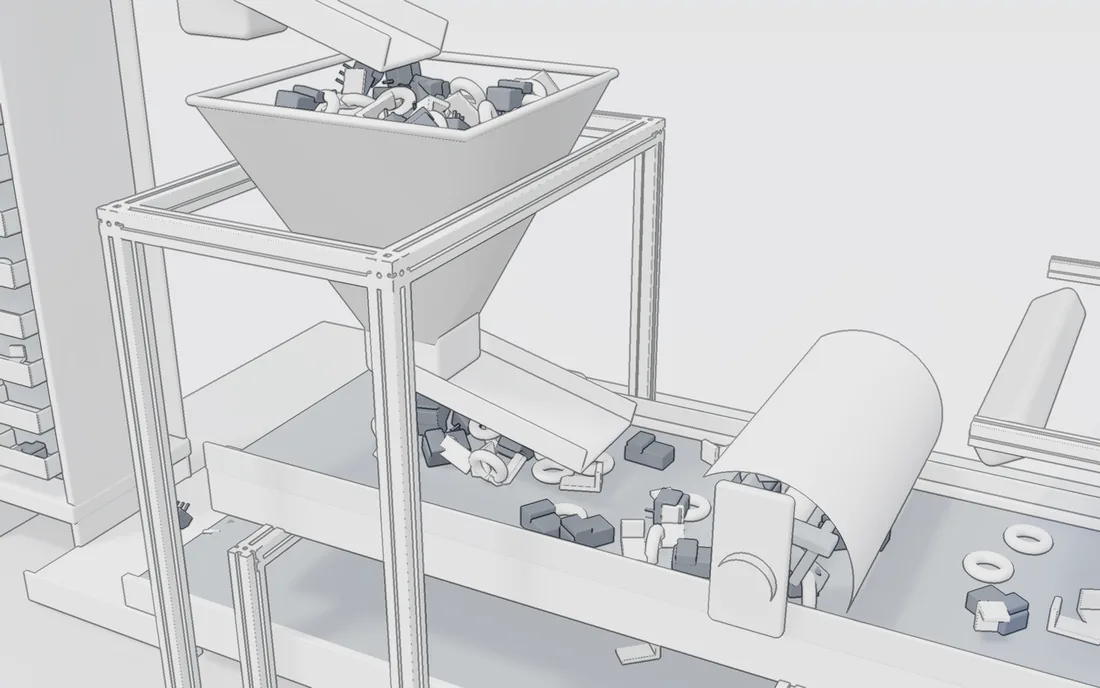 01
Bulk feeding
Parts enter in bulk and are spread on the belt in a controlled, spaced way to reduce overlapping. The feeder works with one reference at a time.
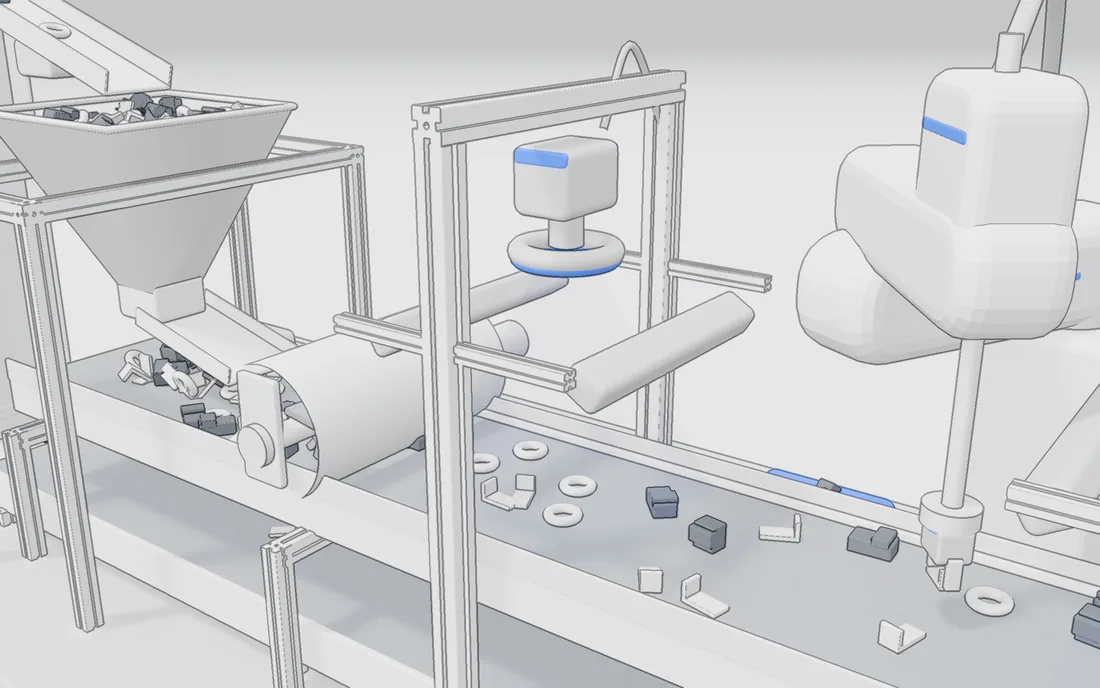 02
First inspection: 2D vision with AI
Checks in real time the conformity of every part and its separation on the belt. Parts of another reference that appear on the belt are always treated as rejects.
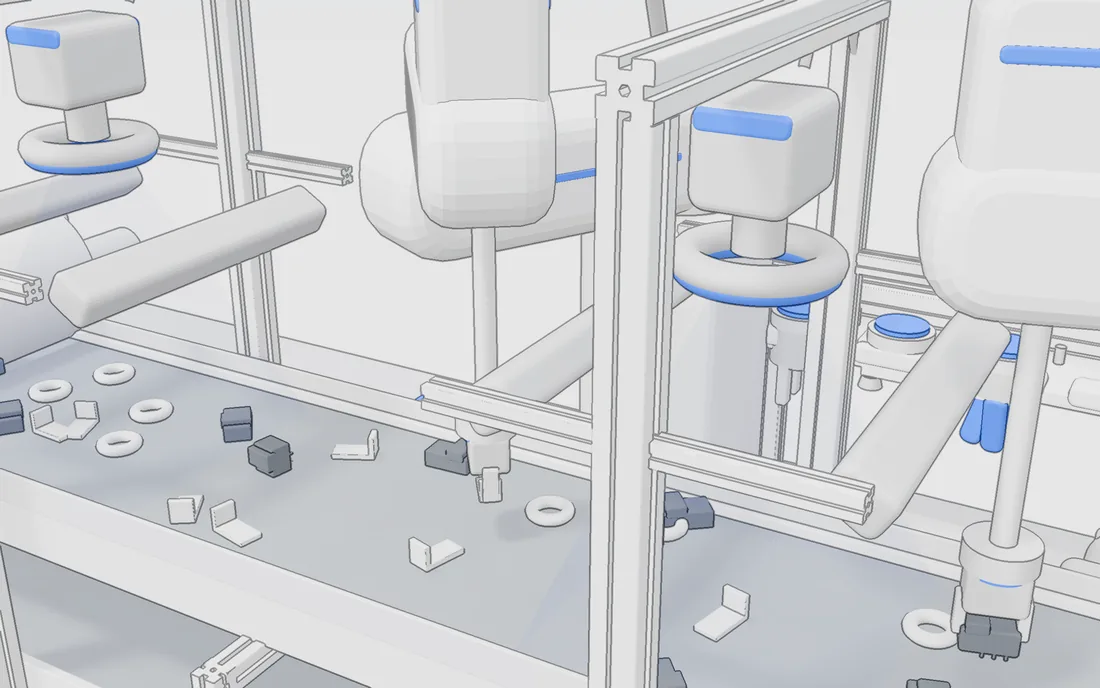 03
Rejection and redistribution
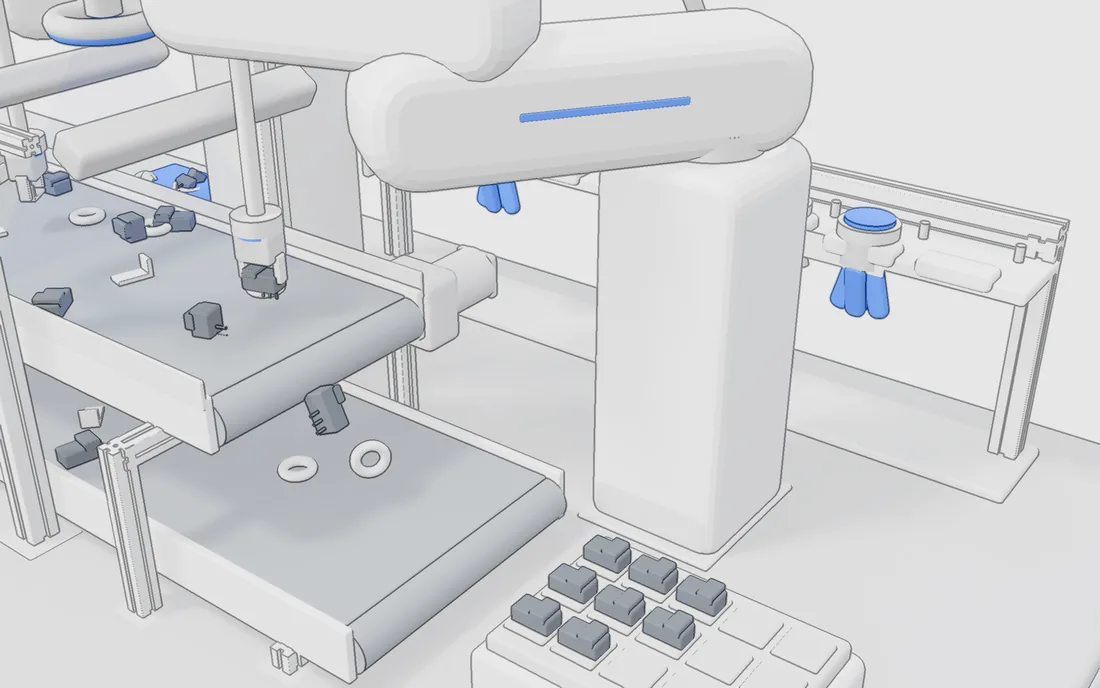
A SCARA robot removes non-conforming parts and redistributes valid parts that overlap or are badly placed, leaving the belt ready for picking.
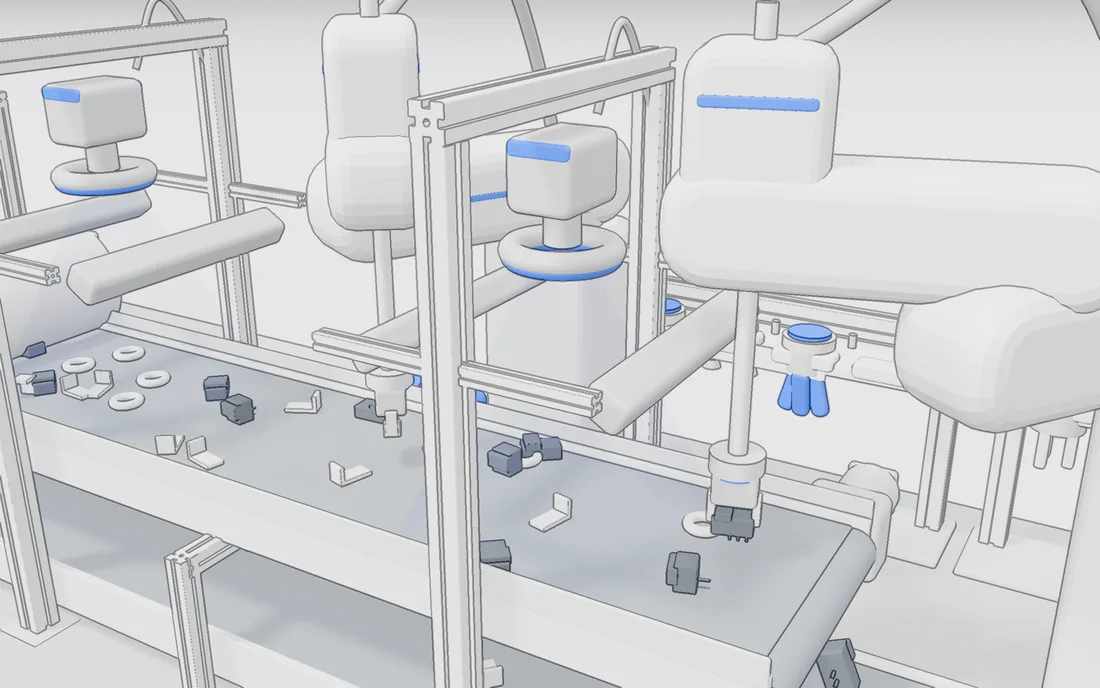 04
Second inspection: position for picking
A second 2D camera, further along, confirms each eligible part and determines its position and orientation, which it sends to the picking robot.
 05
Picking on the moving belt
The picking robot collects the conforming parts while the belt keeps moving, with vision and robot synchronised, and hands them to the next process.
 06
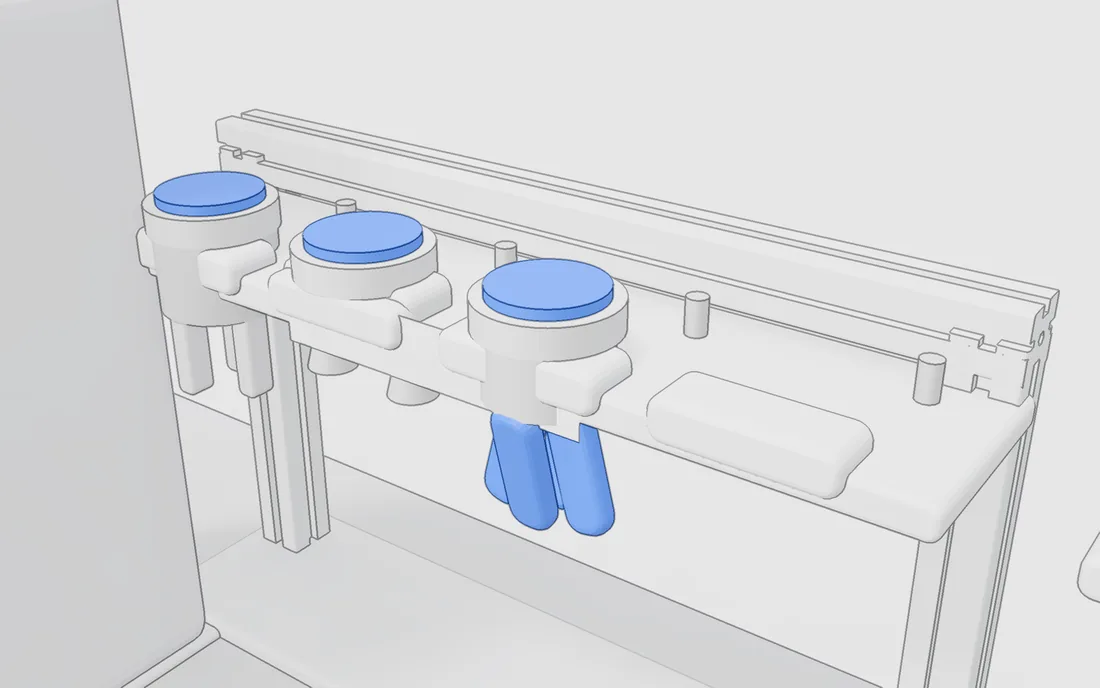
Automatic tool change
Each robot has a gripper store next to it, including soft and flexible grippers, to change tool without operator intervention.
 07
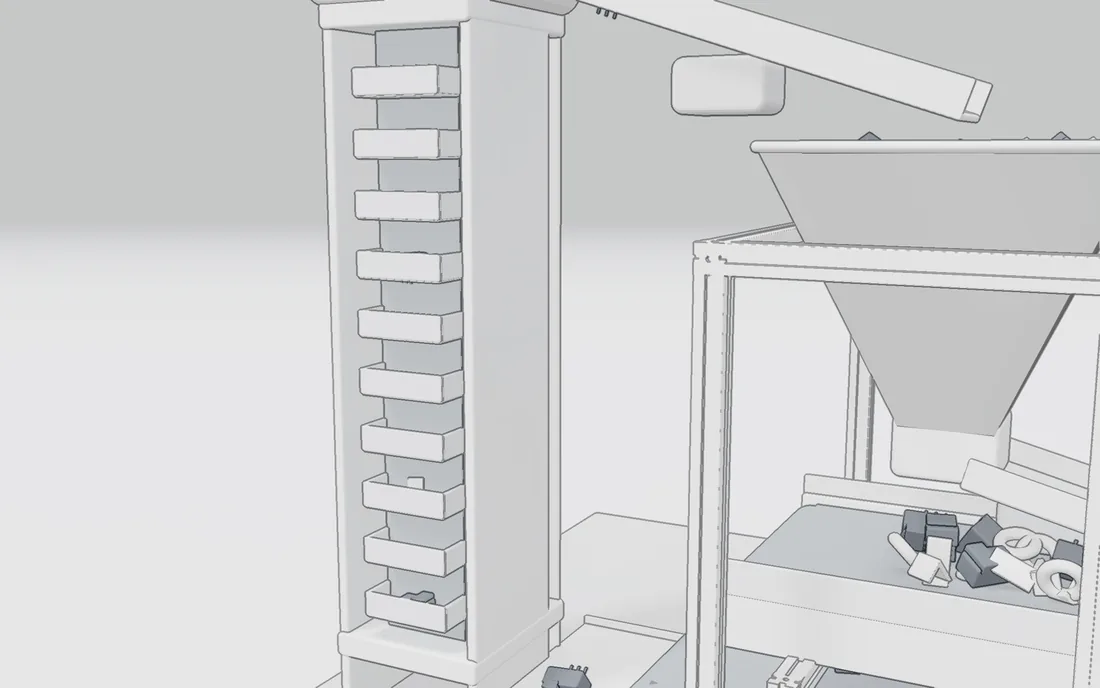
Recirculation
Valid parts that were not picked fall onto a return conveyor and an elevator takes them back to the feeder, with no waste.
Objectives
Four research fronts.
- 01
Flexible multi-product feeder
Handle rigid, semi-rigid, hollow and irregular parts, with no physical reconfiguration between references.
- 02
Robotic perception with 2D vision and AI
Real-time quality control and part location, with models trained per product family rather than per reference.
- 03
Active redistribution and rejection
SCARA robots with soft, flexible grippers to separate overlapping parts and segregate non-conforming ones.
- 04
Modular interface for Industry 4.0
Standard industrial protocols (OPC UA, Profinet, EtherCAT), secure remote access, monitoring and integration with MES and ERP systems.
Expected results
At the end of the 36 months.
- Prototype validated in a real industrial environment, at technology readiness level 7 (TRL 7).
- Much shorter set-up times when changing reference.
- Less human intervention in repetitive and critical tasks, with better ergonomics.
- Higher quality and traceability, less material waste.
- Open architecture, compatible with different robot brands and with MES/ERP systems.
Applications
Sectors with hard-to-feed parts.
Validation in a real industrial environment involves four companies from different sectors. See Consortium.